Monday, August 07, 2006

Fast Times at Ridgemont High ****1/2


There are plenty of things that I think I know all about, but often when I go back and study them I realize how much I had missed. “Fast Times at Ridgemont High” is one of those movies that we’ve all seen a million times, but I realized the other night that I had never actually sat down to watch it from beginning to end. So I did, and wow! I’ve always liked the movie, but I never appreciated what an insightful look into teenage life it is.

For the five people in the free world who haven’t seen it, “Fast Times” is an ensemble movie that follows the stories of several high school kids. Brad Hamilton (Judge Reinhold) starts his senior year on top of the world, with a job, a car, and a girlfriend. He is a self-described “successful, single man,” but then he loses his job and his girl, and winds up spending the year bouncing from one crappy fast-food job to another. Mark ‘Rat’ Ratner (Brian Backer) is too shy to put the moves on his dream girl, Stacy Hamilton (Jennifer Jason Leigh). The guy is so awkward that he is hard to watch, probably because I can remember being that way myself. Meanwhile, his friend Damone (Robert Romanus) is too smooth (sort of) for his own good. Damone is hilarious with his swagger, his Brooklyn accent, and his bogus romantic advice: “When it comes to the making-out part, make sure the first side of Led Zeppelin IV is playing.” On the female side, Stacy (Rat’s dream girl) explores her newly discovered sexuality, heavily influenced by her friend Linda (Phoebe Cates), who is 15 going on 30 and pretends to know a lot more about sex than she does.

And then there’s Jeff Spicoli. What can I say about Spicoli that hasn’t already been said? Sean Penn inhabited this role completely, staying in character throughout filming. He created the prototypical surfer dude. Every stoner-surfer-California-goofball character since 1982 owes a debt to Spicoli. Having said that, fairness demands that we give credit where credit is due. The Spicoli arc in “Fast Times” would not be nearly as memorable were it not for the genius of Ray Walston as Mr. Hand. Serious, no-nonsense Mr. Hand is the perfect foil for happy-go-lucky Spicoli. In one great example of their dynamic, Spicoli has pizza delivered to himself in the middle of Mr. Hand’s class. Hand counters by commandeering the pizza and sharing it with the other students, even enjoying a slice himself.

As entertaining as he is, Spicoli is an outlier in this film, providing comic relief. His essence is a refusal to grow up. The main theme running through all the other character’s arcs is that they are growing up too fast. They are dealing with sex and its consequences, relationships, and careers on a level that is too old for them. That’s why “Fast Times” has aged so well; kids today are dealing with all the same stuff. “Fast Times” is far from a perfect movie, but I have come to appreciate its honest portrayal of high school kids. The characters are not idealized innocents or cynical sophisticates. With their bumbling horniness, delusions of grandeur, and lapses of conscience, the kids of Ridgemont High are very real.

Even if “Fast Times” were otherwise completely horrible, it would still be worth watching if only for one scene. Fellas, I think you know what I’m talking about. I’m not normally a believer in so-called “Intelligent Design,” but when Phoebe Cates climbs out of that pool, I know there’s a God! I don’t think water has dripped off a tastier water nymph before or since. (Well, maybe Denise Richards in “Wild Things.”)

Besides its actual content, “Fast Times” is famous for a couple of things. First is how the story came about. As the legend goes, Cameron Crowe posed as a high school student to research his story, which started as the novel “Fast Times at Ridgemont High.” He was then asked to adapt his novel into the screenplay for the film. All the characters are based on people he actually got to know in his classes. The film is also now seen as the starting point of a lot of great acting careers, much like the film “The Outsiders.” When director Amy Heckerling cast them, Judge Reinhold, Jennifer Jason Leigh, Phoebe Cates, Forest Whitaker (the school football star), Eric Stoltz (in a bit part), and Nicolas Cage (in a bit part, credited as Nicolas Coppola) were unknowns. Even Sean Penn was at the beginning of his career.

I think that the first couple of times I watched “Fast Times” I was a little put off by the tone. I recently read Roger Ebert’s old review of the film, and he hated it. I think he ran into the same problem I did. On the surface this film seems like it is going to be a straight-up comedy, maybe a teenage sex-romp. While much of it, especially the Spicoli scenes, is simply funny, many scenes blend humor with serious situations. Some of the scenes between Rat and Stacy are funny, but employ awkward silences which, as in the British TV show “The Office,” take a little getting used to. Others are just plain serious, as when Stacy has her second sexual encounter and is left, naked and vulnerable, by her embarrassed lover. It’s best to go into this movie expecting some serious content; otherwise those scenes can seem jarring.

Some consider “Fast Times” to be an “American Graffiti” for the ‘80’s. I’m not sure this is quite right, but I do think that “Fast Times” is built to last. Already the movie is almost 25 years old, and as timely as ever. If you haven’t seen it in a while, I suggest you watch it on DVD. Then watch the insightful and revealing commentary track with Cameron Crowe and Amy Heckerling.

4.5 stars out of 5.

Thursday, July 27, 2006

Wallace and Gromit: The Curse of the Were-Rabbit


There’s something about Clay-mation that I dig. I liked it back in the day when they were using it to sell California raisins, and I like it now, when most animated entertainment is just computer programs tripping over themselves to see who can come up with the cleverest pop-culture reference. As the Shrek sequels and CGI rip-offs become increasingly frenetic, Clay-mation offers a slower-paced, less busy form of storytelling. That said, Let me make it clear that there is nothing “slow” about “Wallace & Gromit: The Curse of the Were-Rabbit.” This is high-flying adventure filled with belly-laughing fun; more fun than any barrel full of CGI monkeys.
Some folks already know of Wallace & Gromit from some short films on BBC television that are much-loved in the U.K. Wallace is a scatterbrained cheese addict who invents all manner of Rube-Goldberg-style devices. These frequently backfire in some way, requiring Wallace’s quick-thinking, long-suffering hound Gromit to save the day. In “Curse of the Were-Rabbit,” Wallace invents a brain-washing machine and attempts to train the local rabbits not to eat people’s vegetables. Naturally, mistakes are made, and he manages to create a monster rabbit, a veggie-eating machine that puts the annual giant vegetable contest at risk. Wallace and Gromit attempt to stop the beast by “humanely” catching it before the oily Victor Quartermaine (voiced by Ralph Fiennes) can shoot it. Truly fun for the whole family!
I hate to keep ripping on the computer-animated movies, but in recent years it seems that every animated feature has to slip in some slick 70’s or 80’s pop culture references to keep the adults entertained. “Wallace & Gromit” doesn’t have to do that, because it is just plain funny. Everyone can enjoy it, even the dog.
4.5 stars.

Tuesday, July 25, 2006

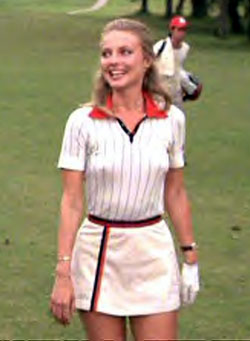
Caddyshack (1980)


Lately I’ve been trying to re-watch some of the old movies that I have come to take for granted. Movies that I maybe haven’t ever sat down and watched, but have seen various parts of them on cable about a billion times. So that’s how I wound up renting “Caddyshack,” one of the cultural touchstones of my generation.
For the few people in the free world who haven’t seen “Caddyshack,” there is no plot, so don’t look for one. I think that some of us who saw all or part of it years ago have actually invented plots for the film which don’t exist. For example, I had gotten the impression at some point that the movie was about Rodney Dangerfield’s character, land developer Al Czervik, trying to buy the club and destroy it. Well, it’s not about that or about anything else really other than allowing the actors and the audience to have a good time. There is some pretense to a plot about young caddy Danny Noonan (Michael O’Keefe) trying to get a scholarship by ass-kissing stuck-up club president Judge Smails (Ted Knight). There is also the enmity between Judge Smails and the socially unrefined, hilarious Czervik, as well as a subplot featuring Bill Murray as groundskeeper Carl Spackler, and his delightfully violent efforts to rid the golf course of pesky gophers.
But “Caddyshack” is not about these plots, it is all about scenes. There’s the scene with the Baby-Ruth in the pool, which to this day makes it hard for me to eat a Baby-Ruth. There’s the scene with the priest golfing in the thunderstorm. There’s the dancing gopher. There’s the scene with Cindy Morgan naked. Who could forget the Bill Murray “Dalai Lama” story, and that weird scene in Bill Murray’s apartment, which was added on after the fact when the filmmakers realized that their two biggest stars, Murray and Chase, didn’t have a scene together. Good times, people!
As cool as those scenes are, I have to admit that while re-watching “Caddyshack” I was struck by how my memory of the movie was much better than the movie itself. I didn’t realize it before, but most of the acting is terrible! Michael O’Keefe is almost unwatchable, and even Chevy Chase is mostly uninspired as golf pro Ty Webb. That “Caddyshack” manages to rise above its own lameness is a testament to the genius of Bill Murray, with an assist from a wickedly insulting Rodney Dangerfield. Thanks to these two, the film is worth watching. For the majority who have already seen it, however, your best bet may be to just reminisce.

3 stars.

Friday, July 07, 2006

Nacho Libre (2006)


With a baby in the house, I don’t get to see movies in the cinema much these days. So when the opportunity came to take my wife to the movies, we wanted to pick something really good. “Nacho Libre,” which brings together the creators of the hilarious “Napoleon Dynamite” (Jerod and Jerusha Hess) and foulmouthed funnyman Jack Black seemed like a sure thing. Two great tastes that taste great together!

Wrong, dude! How could we have known what a waste of time this movie is? Well, we could have heeded the critics who almost universally hate it. Or maybe we could have thought about the differing comedy styles at work here. “Napoleon Dynamite” used unknown actors to create hilariously un-self-conscious characters. Jack Black’s style, on the other hand, is all about being Jack Black. Unfortunately, “Nacho Libre” sucks all the funny out of Black’s routine, leaving nothing but a lame, fake Mexican accent. Meanwhile, the Hess’s characterizations, which held some nuance in “Napoleon Dynamite,” are simplified into predictable grotesques in “Nacho Libre.”

Black plays Nacho, a monk who cooks at a Catholic orphanage in Mexico. His real passion isn’t Christ, though, it is Lucha Libre, Mexican pro wrestling. For some reason, he hooks up with this really skinny, homeless dude (Hector Jimenez) and the two enter amateur tag-team wrestling matches. Despite their complete lack of “skills,” the team is a crowd-pleaser, and they learn to their delight that in wrestling, even the losers get paid. Nacho starts out using his winnings to buy better food for the orphans, but he winds up scoring some polo shirts and polyester pants in his efforts to seduce a tasty nun (Penelope Cruz look-alike Ana de la Reguera).

Nacho and company don’t bother speaking Spanish; they just speak English with stereotypical Mexican accents, which is brilliant! I’d like to put in a request that all foreign-language films come this way from now on. Imagine how much better a classic like “The Bicycle Thief” would have been without those pesky subtitles. “Mama Mia. Somebody took-a my bike!”

Humor, like food, is purely a matter of taste. Somebody must be enjoying “Nacho Libre” as I hear it has done well at the box office. To my taste, this movie is a plate of soggy chips, with bland salsa. Some of the sight gags, like Nacho and his skinny partner wrestling a couple of midgets, are mildly amusing, but most of the jokes are just plain dumb. I know some people made the same accusations about “Napoleon Dynamite,” but that film had a certain freak-show genius to it. “Nacho Libre” tries for the same spirit, but fails, leaving Jack Black with nothing funnier to do than flaunt his endomorphic physique.

There’s a scene in “Napoleon Dynamite” that exemplifies the way that film found the absurd in daily life. Napoleon and Pedro set up a ramp to jump Pedro’s bike off of. With his unfailing geek karma, Napoleon collapses the ramp when he hits it, racking himself in the process. That scene resonates because we have all jumped our bikes off of ramps like that, and we have all seen a buddy rack his balls on the cross-tube of his bike. And, dude, it was hilarious! Now imagine that instead of that simply photographed scene, they had had Napoleon set off on some important mission on the bike, and he ran off of a cliff, crashing spectacularly. That’s what “Nacho Libre” is like. Thanks to a much bigger budget, the scenes are bigger and better photographed, but they lack that “Dynamite” spirit. The question in my mind is whether the Hess’s are a one-hit wonder, or if they will someday recapture that spirit that made “Dynamite” so enjoyable, and put out a movie worth watching.

As for “Nacho Libre,” one thing that I will credit it for is timeliness. Given all the immigration-related turmoil surrounding Mexicans these days, what we really needed was a movie that shamelessly mines the stereotype of Mexicans as greasy, low-rider driving taco-eaters. “Nacho Libre” is that movie. Thanks to a couple of white Mormons from Idaho (the Hesses) and Mike White (the whitest white man living), we can laugh at Mexicans instead of with them.

1 star out of 5.

Saturday, July 01, 2006

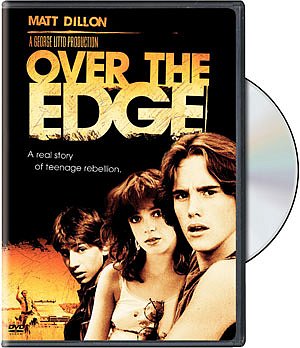
Over the Edge (1979)


One thing about getting movies from Netflix is that they will make recommendations for you based on your movie selections. Some of these are dumb, like “Oh, you liked ‘Reservoir Dogs,’ so you might enjoy ‘101 Dalmations’.” Others make more sense. Based on the fact that we LOVED “Repo Man,” Netflix suggested this movie about youth-gone-wild called “Over the Edge.” It’s Matt Dillon’s first movie, so we figured “What the hell.” I can’t say that I see any connection to “Repo Man,” but it turned out to be pretty good, in a twisted way.
“Over the Edge” follows the exploits of several early-teenage kids in a suburban planned community, which I think is somewhere in Colorado. Some of the kids live in the upscale part, while others live in tenement-like apartments, but one thing they all have in common is that there is nothing for them to do out in the middle of nowhere but get in trouble. And get in trouble they do. They get stoned, screw, and vandalize everything in sight, and their parents only seem to get involved with them when the police call. Finally, the parents have a meeting to discuss the “youth problem”, and their kids bring reality home to them in a truly violent climax.
This is one of those rare movies in which teenagers are played by actual teenagers, instead of 20-year-old models. Using real 13-year-olds really benefits the film, lending stark reality to the disturbing nature of these kids’ lives. The story goes that the filmmakers first held regular auditions for the movie, but they didn’t think the clean-cut, drama club kids they were getting had the right look. They then just went to some New York junior high schools and looked around, which is where they found young Matt Dillon, getting suspended in the principal’s office. The rest, as they say, is history.
These “troubled youth” type movies tend to either border on exploitation or look like after-school specials, but “Over the Edge” manages to walk the fine line between the two. The film has something of a “Reefer Madness”-esque, public service announcement feel, but I have to say I was totally entertained. “Over the Edge” has aged very well, and the story could just as easily be set in 2006 as in 1979. The film’s overt message is that suburban communities often lack amenities for kids, and bored kids are trouble. As one character puts it, “Seems to me like you all were in such a hopped-up hurry to get out of the city that you turned your kids into exactly what you were trying to get away from.”
“Over the Edge” got me thinking about how movies have expressed our cultural anxieties about the “younger generation.” I think that adults have always had a tendency to think that their children are out of control, but it seems that the sixties and seventies were a more openly rebellious time for young people. Some writers have suggested that movies from that period like “Rosemary’s Baby” (1968), “The Exorcist” (1973), and “The Omen” (1976) reflect the fears of adults at that time that their children were literally monsters who had turned against them. If so, then maybe more overt films that came out later, like “Over the Edge” and “The Outsiders” (1983) represent some progress in terms of adults trying to understand what their kids are dealing with. Of course, “Rebel Without a Cause” came out in 1955, so maybe I’m just making all this up. Either way, even after 25 years, “Over the Edge” retains the ability to shock, and is worth watching.

3 stars out of 5

Saturday, June 24, 2006

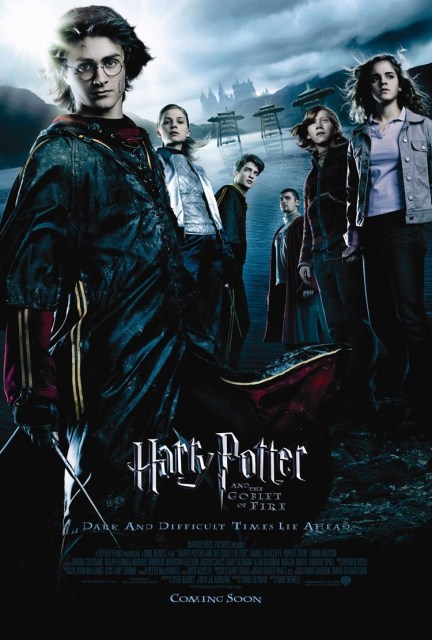
Harry Potter and the Goblet of Fire (2005)


Well, another Harry Potter movie made it to DVD. Like everyone else in the free world, I did my civic duty and watched it, and yes, Maximus, I was entertained. This latest installment features Harry entering a tournament of wizards, and the kids finally start dating. Of course, Lord Voldemort makes an appearance.
My list of complaints about the Harry Potter films is long, so let’s get right to it. First, Harry is supposed to be this powerful wizard, but we hardly ever see him cast a spell that Hermione couldn’t have cast just as well. In the first Star Wars, Luke seems like a snotty, young hick, but when he suddenly blocks 3 laser blasts with that visor over his eyes, we start to realize that he might have something special. After 4 movies, I still haven’t gotten that feeling about Harry. Instead of someone who works magic, he just seems like a good-hearted bloke around whom magical things happen.
Second, why are all the spells in Latin? Rome was one of the world’s most logical, scientific, non-superstitious societies. The Romans were one of the least likely people to have been into magic, so why would all the spells be in their language? I would think it would be something like Sumerian, Hebrew, or one of the Celtic tongues. I realize this is a very nitpicky point to make, but for me it is just a reminder that while these films (and books) appeal to many adults, they are still kid’s fare.
With that in mind, I suppose I will shut up about the negative points. If adults are going to indulge in children’s tales, we shouldn’t complain that the story is immature. “Harry Potter and the Goblet of Fire,” the fourth Potter film, is at once the most engrossing of the stories so far, and the clunkiest. Throughout, the film benefits from acceptable dialogue, superb action, and excellent acting from stars Daniel Radcliffe (Harry), Emma Watson (Hermione), and Rupert Grint (Ron), as well as a really creepy Ralph Fiennes as Voldemort. On the other hand, this two and a half hour movie probably would have been even better at three hours. There are several points where it seems key, or at least potentially entertaining, scenes were cut. These lead to incongruous scene changes, which makes the story lurch forward a bit.
The Harry Potter films are much like fast food, perfectly suited to younger tastes. As an adult, I can still totally devour a Macdonald’s burger, but at the end I am left feeling vaguely unsatisfied, and so it is with these movies. I guess if I really cared to fill in all those details, I would read the Harry Potter books, which would probably explain away a lot of my other complaints about the series. For now I am content to just enjoy the movies as the popcorn fare they are.

3 stars out of 5

Friday, June 23, 2006

Saget Chic

This doesn't necessarily relate to movies, but Has anybody noticed that all of a sudden Bob Saget is EVERYWHERE? He killed in that movie "The Aristocrats," then he showed up on the HBO show "Entourage." Now there's a killer rap video on www.youtube.com called "Rollin with Saget." You can't get out from under the guy.
We had Lesbian Chic, then Porno Chic. Now it's Bob Saget Chic. Check it.

Thursday, June 22, 2006

New York Doll


Whether I am watching a movie or reading a book, one thing I enjoy is for it to have a story. I know that sounds obvious, but let me define what I mean by “story.” A set of characters (or people, in the case of non-fiction) is introduced. The narrative then takes the characters through a series of events, usually involving an element of conflict and resolution. By the end of the story, the characters have been changed in some way by the events that occurred. If it is a good story, then I will have been changed, too.
Once again, I know, obvious stuff, but when I look at some of the movies that get tossed our way, I am amazed at how some of them are unable to meet even that basic definition of story. That would be understandable with documentary films, which purport to be non-fiction. Life does not always fall out into a neat story format. In fictional stories, however, the creator has the luxury of making everything up, so there is no excuse for a lack of story.
I started thinking about this while watching the movie “Junebug,” which was released last year after a well-received Sundance screening. Everyone else seemed to love this dreary piece of naturalism, but I didn’t grok it. It’s one of those stories about a son returning home, in this case with a new wife, and how that creates a bunch of family dysfunction. I’m not really a fan of this genre anyway, but I can tolerate one of these films if something interesting happens, some kind of STORY. In “Junebug,” not much happens, and the characters don’t change one bit. I wonder what was the point of that hour and a half?
As tedious as “Junebug” and other story-free movies are, they look even more pathetic when contrasted with the amazing stories woven together from real-life by some documentary filmmakers. Great recent examples include documentaries like “Daughter from Danang,” “Murderball,” and “Grizzly Man.” That brings me to “New York Doll,” one of “Junebug’s” classmates in the 2005 Sundance Film Festival, and another example of great storytelling using real-life events.
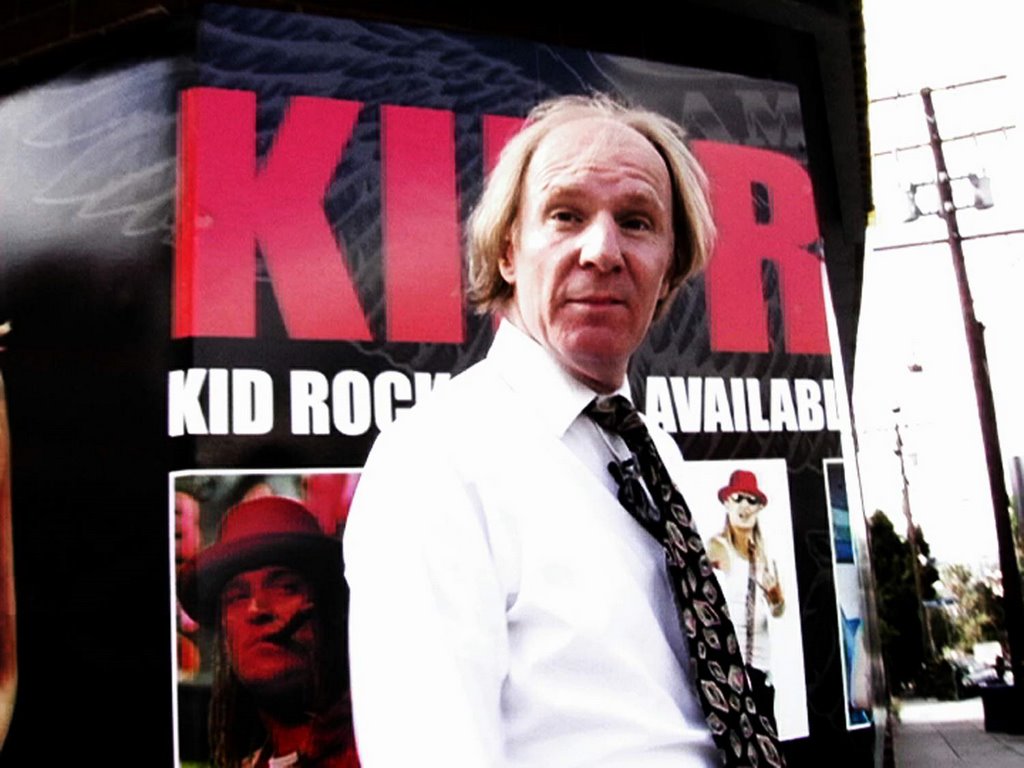
The New York Dolls were one of the seminal bands of the early-70’s punk scene. With their cross-dressing and outrageous antics, they never quite achieved mainstream success, but they helped kick-start the punk movement before splitting up in the late 70’s. In his first film, director Greg Whitely documents the reunion of the Dolls for a London music festival hosted by mope-rock singer Morrissey. Two of the original members had succumbed to the rock-n-roll lifestyle, leaving three original Dolls, Sylvain Sylvain, David Johansen (who enjoyed some 1980’s success with his bizarre lounge-singer character Buster Poindexter), and Arthur “Killer” Kane. Of these, bassist Arthur Kane’s post-Dolls life had been perhaps the most intriguing. He had burned out on booze, attempted suicide, and finally become a Latter Day Saint (That’s Mormon, for you Easterners.) Despite finding some peace and sobriety in his new religion and his job at the Mormon geneology library in L.A., Arthur clearly nurtured bitterness and regret over his lost rock-n-roll dreams.
“New York Doll” picks up at this point, following the band members as they gear up for the Dolls reunion and concert. The film focuses on Arthur Kane, who really achieves some redemption as he makes up with his old band-mates and relishes his return to the stage. Arthur annoyed me at first with his nebbishy whining, but his wry sense of humor ultimately won me over. I also really dug Arthur’s Mormon co-workers and fellow church members, who look straight-laced but are really cool! I can imagine that the filmmaker started out following all of the Dolls, but by the end of filming, it must have been clear that the real STORY here was Arthur’s journey. Greg Whitely recognized that and used it to make “New York Doll” a story in the best sense.
4 out of 5 stars.

Monday, June 19, 2006

Quick Change (1990)


The career arc for comedians like Bill Murray has become monotonously predictable. They start with light comedies (Caddyshack), then after a few years move on to more refined comedies (Rushmore), and next thing you know they’re hustling for an Oscar (Lost in Translation.) I guess if you can do good comedy, you can do anything. At this rate, that Stifler guy from “American Pie” will be the next Robert De Niro. Meanwhile, as our comedians gradually get more serious, a supposedly serious actor like Tom Cruise just gets funnier and funnier (albeit unintentionally.)
“Quick Change” is one of those movies from the slapstick phase of Murray’s career, but traces of the Bill Murray that was to come are evident. The film starts with a close-up of Murray’s character Grimm in clown makeup, with that trademark sad sack Murray expression and those eyes that never really smile. As Grimm proceeds to rob a bank, an outraged bank guard asks, “What the hell kind of clown are you?” Grimm responds, “The crying-on-the-inside kind.” That’s gold, Jerry! As the tale progresses, we learn that Grimm is a disgruntled civil servant from the city planning department. He only robbed the bank so that he could escape New York City, because “I’ve seen how this city degrades the individual.” Unfortunately, the robbery turns out to be the easy part for Grimm and his gang. Negotiating the urban wasteland of New York proves much harder, and hilarity ensues.
One thing I have noticed is that movie and TV portrayals of New York City have changed over the years. Nowadays everything is about what a great, vibrant city New York is. Back in the 70’s to early 90’s, though, New York was always painted as a dirty, seedy place full of assholes, perverts, and muggers. What happened? Did the city change, or did the movies just start showing a different side? Whatever the case, “Quick Change” (1990) is definitely part of the old, New-York-as-hell-hole school.
My only complaint is that this is one of those Comedies of Frustration. You know the type. Circumstances and other characters conspire to make a simple task extremely frustrating for the main character, and we are free to hoot wildly at him. (See “Planes, Trains, and Automobiles,” “The Money Pit,” “Funny Farm,” etc.) The problem is that if a movie has halfway decent characters (which “Quick Change” does), I identify with them. So then I wind up feeling really frustrated, too. For example, Randy Quaid does a great job as Grimm’s friend Loomis, but I wound up wanting to kill the guy. It’s like, “Just leave him behind! Go! You idiots!”
Other than the frustration factor, “Quick Change” is good fun and classic Bill Murray. It’s worth watching if you have nothing better to do some night.
3 out of 5.

Sunday, June 18, 2006

Repo Man


I’m sure there are movies about modern-day street warriors that are better than “Repo Man,” movies with better punk soundtracks and more bizarre, dark humor. I’m sure Emilio Estevez has probably made better movies. The problem is, after watching “Repo Man” last night, I can’t think of any. This movie totally blew my mind, and I’m lovin’ it!
Displaying the baby-faced punk attitude that made him great in “The Breakfast Club” and “Men at Work,” Estevez plays 18-year-old Otto, a broke, bored underachiever with a bad attitude and no prospects. He falls in with a colorful bunch of characters at a car repossession business. Under the mentorship of Bud (Harry Dean Stanton), Otto learns the Repo Man Code and, oddly enough, finds meaning and purpose in his new job. Meanwhile, an apparently insane guy in a ’64 Chevy Malibu has made his way from Los Alamos, NM to Los Angeles with a trunk full of deadly government secrets. The government puts out a fat bounty on the Malibu, which sets Otto and every other Repo Man in L.A. hunting for it. This is all set against a backdrop of seedy, low-rent L.A. suburbs, with a killer punk soundtrack including Black Flag, Suicidal Tendencies, Iggy Pop, and a live performance by the Circle Jerks.
“Repo Man” is a cult classic in the best sense because it consistently holds onto its sense of the absurd without having to wink at the camera. It reminds me of the movie “Tremors.” Both are bizarro, sci-fi fun-fests that stand up well to repeat viewings.
In a lesser film, where the characters and dialog would be merely vehicles to forward the plot, we would be unlikely to suspend our disbelief enough to follow such an unlikely story. Certain other films go ahead and acknowledge their absurdity, so we don’t have to bother with suspension of disbelief, but they bend over backwards to let us know how clever they are, with their tongue-in-cheek and all (The “Austin Powers” movies come to mind). “Repo Man” doesn’t suffer from any of that crap. The characters are intriguing, and time is taken to develop them with scenes that simmer with fun dialog and action.
In a lesser movie, Otto would get the girl, or save the day, or come to some great realization. In “Repo Man,” the only revelation is something we have already figured out for ourselves: “This Repo Man thing is intense!”
4.5 stars.