Wednesday, December 29, 2021

Don't Look Up (2021) **


What do you get when you bring together a mind-boggling, all-star cast, including Leonardo DiCaprio, Jennifer Lawrence, Meryl Streep, Cate Blanchett, and a host of other familiar faces for a satire written and directed by Adam McKay (“Anchorman” “Talladega Nights”)? Turns out, you get an unsubtle, overlong, made-by-committee mess.


Lawrence plays grad student Kate Dibiasky, and DiCaprio is her astronomy professor, Dr. Mindy. When they discover a giant comet hurdling towards earth, they report the discovery to NASA and the President. That's what you are supposed to do, right? If you see something, say something. What they don't expect is the lack of response. With the mid-term elections coming up, President Orlean (Meryl Streep) feels it's better to just “sit tight and assess.” The scientists take their story to the media, but the public is more interested in the latest celebrity breakup. Even when the government finally acknowledges the crisis, there are a sizable number of comet-deniers. When the fateful comet becomes visible to the naked eye, the scientists exhort people to “Just Look Up” and see it for themselves. By that time, though, President Orlean has found it expedient to play to the head-in-the-sand crowd, making her slogan “Don't Look Up.”


So, we have a story about a massive catastrophe affecting the entire planet, and our leadership, especially American leadership, is too partisan, short-sighted, and incompetent to do the obvious things that need to be done to address the crisis. The President denies, gaslights, and leads her benighted base in stupid chants, while the media plays to whatever will give them the most clicks. How far-fetched is all that, right? “Don't Look Up” would be a pretty apt satire of the Covid pandemic, but since production started in 2019, I'm pretty sure it is meant as a commentary on the climate crisis.


Either way, the movie is about as subtle as a sledgehammer. I wouldn't absolutely condemn the film just for being too on-the-nose. “Dr. Strangelove” isn't exactly subtle either, and it's a classic. “Don't Look Up” is no “Dr. Strangelove,” however. Even if we forgive the film its scenery-chewing excesses, what we have here is 1 ½ hours of entertainment packed into 2 hours and 18 minutes. There's a decent movie in there somewhere. McKay got some good, if over-the-top performances out of a ridiculously talented group of actors, and he also delivers quite a few wry laughs. There is just too much of it all. What this movie needed was a merciless editor, someone who wasn't afraid to litter the cutting-room floor. The problem may be too much starpower. Wikipedia says that DiCaprio signed on only after major adjustments to the script, and I'll bet he wasn't the only A-lister who had some “notes.” You think a Meryl Streep or a Cate Blanchett is going to tolerate having her scenes cut?


Besides being bloated and self-indulgent, “Don't Look Up” seems destined, like most social commentary these days, to change few minds. Would a better, more concise movie fare better in this regard? It's hard to say. The thing is, everyone watching is going to count themselves among Team “Just Look Up.” I've been paying attention, though, and there are definitely a lot of “Don't Look Up” people out there.


2 stars out of 5

Thursday, December 23, 2021

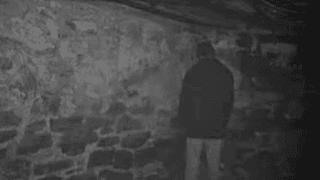
The Blair Witch Project (1999) **1/2


In 1981, an unknown filmmaker made a low-budget horror flick called “The Evil Dead.” The inventive, darkly humorous film not only made director Sam Raimi a household name, it did the same for its star, Bruce Campbell. In 1992, on a relatively low budget of $1.5 million, an unknown writer-director named Quentin Tarantino created “Reservoir Dogs” and became the legend he is today. In 1999, a couple of unknowns named Daniel Myrick and Eduardo Sanchez created a low-budget piece called “The Blair Witch Project.” For a couple hundred thousand dollars, they created the movie that launched the “found footage” movement and earned about $250 million, making it one of the most profitable movies ever. From this auspicious beginning, Myrick and Sanchez went on to do … not much. They did a couple of poorly-regarded Blair Witch sequels, and it looks like both did a couple more projects that you likely haven't heard of, but neither has come close to living up to the commercial promise of their first film.


I think this is because, while “The Blair Witch Project” was an incredible commercial success, it was not that great artistically, something I can see better watching it now, 22 years later. In 1999, it seemed brilliant and scary. Now, I mostly found it annoying.


The story is that a trio of college students venture into the Maryland woods to film a documentary on the legend of the Blair Witch. What exactly the witch is is hard to say. Some locals from a nearby town relate the story of a male hermit who murdered a bunch of children decades ago. Others tell about a woman all covered in fur. The documentary crew heads into the woods to film sites associated with the legend. They get lost, and things get weird. All we know of the story is what they filmed, and the movie is presented as being the footage that was found when their two cameras were later discovered.


The trick to found footage storytelling is capturing enough on film to actually have a plot, while making it believable that the characters would be filming all that action and dialogue. Sometimes it makes sense, and sometimes it's a strain. Much of “The Blair Witch Project” involves the characters arguing over the fact that they are lost in the woods. It doesn't make a lot of sense that any of them would be filming these arguments, and the filmmakers' solution is to have them yell at each other for filming. A lot. It gets old. The found footage conceit gets even more strained when things get scary, people start running, and you wonder why this person is still holding the camera.


You just have to go with it. Remember, there had not been much found footage film-making done up to this point. There are plenty of better movies in this style, including “Paranormal Activity,” “Cloverfield,” “Chronicle,” and “VHYes,” but these all came later. “The Blair Witch Project” was one of the first, and despite myself, all these years later, I still found the ending scary.


2.5 stars out of 5

Saturday, December 18, 2021

Nosferatu (1922) **


We recently re-watched "Bram Stoker's Dracula," and I watched the 1931 "Dracula" years ago. I figured it was time to check out the original. F.W. Murnau's “Nosferatu: A Symphony of Horrors” was based on Bram Stoker's 1897 novel, but made without rights to the story. Stoker's heirs sued Murnau's production company, and a German court ordered all copies of the film to be burned. Had the film not already been distributed overseas, it would have been lost. As it was, copies survived, and the film came to be considered one of the silent-film classics.


The story changes a few details, but it is basically the Dracula story. A solicitor visits an Eastern European backwater to help a wealthy Count, who happens to be a vampire, arrange to move and purchase a house. The Count sees a picture of the solicitor's fiance/wife and becomes obsessed with her, believing her to be his reincarnated lover.


I have to stop here to admit that I did not like the movie very much. I realize this makes me a Philistine among cinephiles, but unlike some other classic silent films like “Pandora's Box” or Charlie Chaplin's “Modern Times,” I found it hard to see what the big deal is with “Nosferatu.” Truth be told, we got bored and gave up on it about halfway through. It is possible that the version we got was a bad copy. Amazon offers several versions of the film, with no indication which is the “official” version. I almost wonder if the copy we saw was made at home by someone who simply mounted a camera in front of their TV. In any event, what I saw sounded bad and looked bad. It was sometimes hard to see what was going on. I will say that Max Shreck looks pretty cool as the Count, and there is one cool effect where the Count is doing one thing while his shadow does another.


Based on my experience, I would not call “Nosferatu” essential viewing. The history of the film is interesting, and there is a great 2000 film about the making of it, called "Shadow of the Vampire." If you decide to watch the film itself, I suggest moderate expectations, and try to find a properly-curated copy.


2 stars out of 5

Monday, December 13, 2021

Marked Woman (1937) ***


We've been watching some older movies lately, and this is an old Bette Davis movie that definitely deserves a viewing.


Davis plays Mary, a “clip-joint” hostess in a nightclub. She and the other hostesses are employed to cozy up to the male customers and get them to buy more drinks and spend more money. It is implied, but never said (due to Hollywood Production Codes), that the girls' duties may extend to entertaining the men outside the club as well. The pay is good, better than an uneducated girl like Mary could get anywhere else, even if she knows that the work will dry up as she gets older. When gangster Johnny Vanning takes over the club, though, the work gets uglier. Vanning turns the place into an illegal gambling den, and he and his boys play rough with anyone who crosses them. When this leads to murder, prosecutor David Graham (Humphrey Bogart) tries to put Vanning away, but first he has to convince Mary and the other hostesses to testify against their ruthless boss.


“Marked Woman” is a solid example of film noir, but it is not half as fascinating as the story on which it is based. The Vanning character is based on Lucky Luciano, a famous, New York crime boss who was jailed for running a prostitution ring. His prosecution, led by Thomas E. Dewey (on whom Bogart's character is based), hinged on the testimony of several of Luciano's prostitutes. Key to gaining the trust and testimony of those women was Dewey's assistant D.A., Eunice Carter, the first black woman to hold that post in New York. To prevent any corrupt cops from tipping off the bad guys, Carter put together a big, synchronized raid of all Luciano's brothels, and none of the officers was informed of the targets until minutes before the raid. To escape the charges, Luciano hid out in Hot Springs, Arkansas, but a New York detective who was there on an unrelated case spotted and recognized him.


Most noir films focus on a male character, with any female characters filling the role of either femme fatale or trusting wife. Even if there is a “hooker with a heart of gold,” she is usually a side character. “Marked Woman” focuses on Mary's journey and that of her fellow hostesses, making this a very feminist movie, especially for 1937. I was especially intrigued by the conversations the hostesses have about their job and life prospects outside the nightclub, and how Mary stands up for one of the hostesses who is starting to show her age. The case against Vanning relies heavily on Mary's testimony, but as a woman of ill-repute, there is doubt as to whether she will be believed. “Marked Woman” is about putting aside judgment of women like Mary and viewing them as real human beings.


3 stars out of 5

Sunday, December 12, 2021

Bram Stoker's Dracula (1992) ***1/2


I saw this one in theaters, back when Winona Ryder was every guy's dream girl. I recall enjoying it, but Keanu Reeve's wooden acting and laughable British accent left a bad taste in my mouth. Reeve's cartoonish performance came to dominate my memory of the film, which is a shame, as he is just a supporting character. It was long past time to give the movie a second chance.


The tale starts in the year 1462. Prince Vlad Dracula (Gary Oldman) defeats an army of Turkish infidels against great odds. Flush with victory, he returns to his castle to find that the clever Turks have sent out a false report of his death, leading his wife, Elisabeta, to fling herself from a tower. The high priest callously informs Dracula that, as a suicide, Elisabeta is condemned to hell. Dracula renounces God and the church, vowing to rise from the dead to avenge his bride. His grief and rage are so deep that the curse is effective.


Centuries later, in 1897, solicitor Jonathan Harker (Reeves) travels to Transylvania to help an eccentric client, Count Dracula, purchase some London properties. Dracula sees a photo of Harker's fiance, Mina (Winona Ryder), who looks just like Elisabeta. Convinced that his bride has been reincarnated, Dracula travels to London to seduce Mina, feeding on the city's inhabitants in the meantime.


At 2 hours 8 minutes, “Bram Stoker's Dracula” runs a bit long, but it is well worth watching. The film hews fairly closely to Stoker's book, and of the film versions of the tale I have seen, this is the best. Keanu Reeves drags the movie down a bit, but not as badly as I remembered. The rest of the cast is aces. Winona Ryder and Sadie Frost are charming and beautiful, and they look great writhing around in their nightgowns in the throes of vampiric fever dreams. Cary Elwes (from “The Princess Bride”) plays one of Lucy's many suitors, and musician/actor Tom Waites plays the character of Renfield, driven mad by Dracula's influence. Anthony Hopkins plays Van Helsing, and Gary Oldman is magnetic as Dracula. Oldman manages to convey the Count's menace, his seductive charm, and, ultimately his tragedy. The entire story is contained within one line, when Dracula tells Mina, "I have crossed oceans of time to find you."


3.5 stars out of 5

Saturday, December 04, 2021

The Night of the Iguana (1964) ****


Based on a Tennessee Williams play, “The Night of the Iguana” tells the story of people at the ends of their ropes, coming together to help one another during one hot, fateful night in Mexico. We first meet the Reverend Dr. T. Lawrence Shannon (Richard Burton), a preacher who loses his post after a sexual indiscretion. We next find Shannon directing bargain basement tours of Mexico. His current tour group, mostly a bunch of lady schoolteachers from a Baptist college, is not going well. The ladies are beset with dysentery and sick of riding in a hot bus. Worse, the youngest member of the tour, 16-year-old Charlotte (Sue Lyon) has taken a fancy to the much older Shannon, and her chaperone does not approve of how much time Charlotte spends chatting Shannon up. Trying to do what is right and keep his job, Shannon repels Charlotte's advances as much as he can, but she is very persistent, and, well, every man has his limits. In Shannon's case, we know that he has reached his limit more than once.


Desperate, beset by his own moral failings, Shannon drags his poe-faced tour ladies to an out-of-the-way hotel that he knows. The owner, Maxine (Ava Gardner), reluctantly grants her old friend and his group lodging, and then is convinced to give a room to a broke artist (Deborah Kerr) and her poet grandfather. Through a sweltering day and night, this motley crew work through their issues as only characters in a play can.


There are definitely times when you recognize that this is a play brought to film. In fact, James Garner claimed that he was first offered the Shannon role but turned it down, because “it was just too Tennessee Williams for me.” The movie is much more dynamic than most play-to-film adaptations, however, and I would say that director John Huston mostly succeeds in turning this story into a movie. There are definitely times when Richard Burton, accustomed as he was to stage acting, overplays his role. The characters' soliloquies sometimes grow a bit long and literary as well. Mostly, though, the film is funny, poignant, and very human, with beautiful black-and-white camera work. Ava Gardner is an absolute revelation, beautiful and full of life. Her acting is so naturalistic that it helps smooth over some of Burton's over-acting.


“The Night of the Iguana” won an Oscar for costume design, and was nominated for several more. Despite its odd title, this is a classic that should not be forgotten, a funny, sexy, existentialist meditation on the interplay between desire, conscience, and repression. Watch it on a hot, humid night with a date and a couple of rum drinks.


4 stars out of 5

Friday, November 26, 2021

The Hunt (2020) ***


Given all that has happened since January 2020, you could be forgiven for forgetting that 2019 even existed. If you scrape your memory, though, you may recall some controversy about a movie that Universal Pictures tried to release. “The Hunt” was a satire about political divisions in the U.S., and the film trailer ran headlong into those same divisions. Before anyone had a chance to see it, Donald Trump and his minions tweeted complaints about the movie, and then some maniac murdered a bunch of people in an El Paso, TX Walmart. Universal decided the timing was all wrong, and canceled their Fall release date. After things had cooled down, they scheduled a new release, for March 2020. You know how that turned out. Covid-19 shut down most theaters, and left the others mostly empty, and “The Hunt” was seen by almost no one. That's a shame, because it's not a bad movie.


The plot is that a group of liberal elites kidnap several conservatives, whom they refer to as “deplorables,” release them on a large manor, then hunt them for sport. You can see why this raised some hackles, but people, including Donald Trump, who complained about it without seeing it just showed their ignorance. “The Hunt” is a violent, humorous satire about the deep rift between Red State and Blue State America, and it does not pick on one side more than the other. Each side gets a chance to show its ass in this farce. Many reviewers have complained about this both-sides-ism, complaining that the film is nihilistic and refuses to make a political statement. I think these reviewers are just blinded to their own political partisanship, and they cannot enjoy a movie that fails to represent their own side of the partisan divide.


Even more than extreme political division, “The Hunt” is about the pitfalls of the online rage machine via which anyone who says anything that offends anyone, anywhere is subject to extreme levels of online bullying. This bullying can lead to people losing their sanity, their job, or their life. Every now and then, we hear about a suicide, and everyone tut tuts. But the next time someone expresses an unpopular opinion, there are always plenty of keyboard warriors waiting to crucify them, emboldened by numbers, anonymity, and their own self-righteousness.


Is “The Hunt” going to fix any of these problems? Not likely, but it's an enjoyable diversion, and star Betty Gilpin is foxy and entertaining. The toughest part for most will be deciding whether to be offended or not.


3 stars out of 5

Monday, November 08, 2021

Midnight Run (1988) ****


Jack Walsh (Robert De Niro) is a man with a code, a code that forced him to leave his job in a corrupt, Chicago police department. Now, he works as a bounty hunter for a bail bondsman and pines for his ex-wife. Still, Jack has his code. He does what he says he is going to do, and he doesn't take payoffs. Hired to hunt down a Mob accountant and get him from New York to L.A., Walsh pursues his assignment single-mindedly, shrugging off bribe offers from the Mob and warnings from the FBI.


Walsh finds his quarry, a task at which both the FBI and the Mob had failed, but getting him from New York to L.A. proves challenging. Mardukas (Charles Grodin) is convinced that he will be killed in prison, so he is highly motivated to make an escape. Meanwhile, their journey by planes, trains, and automobiles is hounded by hit-men and FBI agents.


The story is definitely familiar: A cop chaperones a convict, they get on each other's nerves, and slowly, they become a team. It's fair to say that “Midnight Run” owes a debt to 1982's “48 Hrs.” I'm going to go out on a limb and say that “Midnight Run” is the better film of the two. Don't get me wrong; “48 Hrs.” is a great movie. Eddie Murphy's manic energy mates perfectly with Nick Nolte's acerbic grumpiness. “48 Hrs.” is a pure comedy, though, and there is never a moment when you doubt that things are going to work out for those two. Also, Murphy's personality is a lot to contain, and there are plenty of times when Nolte risks overplaying his growly demeanor to keep the movie from becoming “The Eddie Murphy Show.”


“Midnight Run” is much more a film for grown-ups. The film still rests on the chemistry between De Niro and Grodin, but the performances are much more restrained and believable, the jokes are more subtle, and the emotionally-satisfying ending feels well-earned. That ending, in fact, really stands out in this genre. Rather than the feel-good sequel setup typical of a buddy comedy, “Midnight Run” builds up to a genuinely moving conclusion for its odd couple. This isn't a flashy movie, but it's an enjoyable buddy comedy and well worth a watch.


4 stars out of 5

Monday, November 01, 2021

High Noon ****1/2


I'm embarrassed that I never saw this film until now. It is one of the classic westerns, and I don't really know how I avoided it. What finally brought me around to it was a “Sopranos” episode, where Tony asks, “What happened to the strong, silent types, like Gary Cooper in “High Noon”? … He just did what had to be done.” I figured an endorsement from Tony Soprano was a sign I should check this one out.


Cooper plays Marshall Will Kane, whom we meet as he is marrying a hottie named Amy (Grace Kelly). After the ceremony, Kane hands over his badge and gun. Amy, a Quaker, is a pacifist, and she has convinced him to give up the lawman's life to move away and run a store. Just as the happy couple are about to get on their way, Kane learns that Frank Miller, whom Kane had arrested for murder, has been pardoned. Miller is coming to town on the noon train, and everyone reasonably assumes that he and his gang will be coming for Kane.


Everyone, including Amy, wants Kane to hightail it out of town before Miller arrives. Something in Kane just won't allow himself to be run off, so he defies his wife, straps his guns back on, and sets about raising a posse. Only problem is, the townsfolk aren't so interested in risking their lives to help him face the Miller gang. Everyone has different reasons for begging off, but as an hour and a half ticks off to noon, Kane finds out just how alone he is in the town he had loved and protected.


“High Noon” is so rich in themes that graduate theses have probably been written on the film. For one, it's a criticism of civilization's tendency towards decadence. Will Kane found Hadleyville a wild place run by killers and rapists like the Millers. He tamed the town and made it safe for women and children, and he did it with the help of ordinary citizens who were willing to risk their lives to build a decent home. Now, those same townsfolk have gotten soft, and they reckon it's someone else's job to risk life and limb for their safety. The story is also a celebration of the kind of rugged individualism that is so out of favor nowadays, and don't get me started on the feminist themes.


I'll bet “High Noon” is popular in film classes as well. The movie is known for telling its story in more-or-less real time, meaning that the events all take place between 10:30a.m. and noon, and the movie itself is about an hour and a half long. This is a really effective way to draw the audience into the story. We are reminded of Kane's time running out by periodic shots of the clock ticking away towards noon, as well as by low-angle shots of the empty train tracks, which will soon be full of trouble. My favorite shots are those of Kane walking through the abandoned streets, looking for allies and finding none. He looks like the loneliest man in the West. Gary Cooper did without makeup, to enhance his character's look of haunted betrayal, and it works.


Cooper's haggard appearance also serves to emphasize my one complaint about the film, which is that Grace Kelly is badly miscast as Amy. The whole idea of Marshall Kane marrying a Quaker pacifist and retiring to be a shopkeeper is a bit far-fetched, and it requires a believable actress to sell it. The role needed someone who could hold her own against Cooper, like Katharine Hepburn did with John Wayne in “Rooster Cogburn.” Kelly just doesn't bring much to the role, and the age difference between her and Cooper is distracting (Kelly was 21 and looks about 17, while Cooper looked all of his 50 years.)


To my eyes, “High Noon” looks like a pretty classic story of a rugged, western hero, but it turns out the film was controversial. The film put off audiences with its lack of typical, Western-movie action until the very end. “High Noon” also got caught up in the Hollywood blacklisting movement. Screenwriter Carl Foreman was a former communist who refused to name names in front of Congress. I feel like today that should make him a hero to all decent people, but in 1951 it made him a traitor. John Wayne was originally offered the Kane role, but turned it down, refusing to work with Foreman. Blacklisted, Foreman ultimately sold his share of the production and moved to the U.K. Wayne called the movie “un-American,” which is ironic considering it was condemned in the Soviet Union as “glorification of the individual.” I figure any movie that managed to piss off both the Russians AND reactionary Commie-hunters here in the U.S. was doing something right. Not to mention, it got the Tony Soprano seal of approval!


4.5 stars out of 5

Saturday, October 30, 2021

No Sudden Move (2021) **


Steven Soderbergh's directing career has been all over the place since he wrote and directed 1989's groundbreaking “Sex, Lies, and Videotape.” He did “Out of Sight,” “Erin Brockovich,” "Contagion," the soulless "Ocean's" franchise, and, inexplicably, the goofy-but-fun "Magic Mike."  Now, into this movie-starved pandemic year comes Soderbergh's latest, the crime caper “No Sudden Move,” and boy, are critics falling all over themselves to praise this movie! Me, I'm not so impressed.


Don Cheadle and Benicio Del Toro play Curt and Ronald, a couple of low level crooks in the 1950's hired to hold a family hostage while a 3rd crook (Kieran Culkin) takes the man of the family to retrieve industrial secrets from the car company where he works. The job is inherently threatening, but the plan is for no one to get hurt. Things don't work out that way, and Curt and Ronald find themselves on the run from multiple criminal gangs as well as the police. They decide to get proactive and sell the industrial secrets themselves, a process that involves multiple double crosses as they parley with different parties while trying to figure out how much they can trust each other.


“No Sudden Move” is very stylish, beautifully-filmed, and well-acted. The pacing is good, and the movie reminded me for a while of the Coen brothers' classic, “Miller's Crossing.” The difference is that where the Coens bring everything together in the end for a satisfying conclusion, Soderbergh's story turns into a mess. Near the end, when Curt and Ronald meet the character known as Mr. Big (Matt Damon), Big goes into this long, scenery-chewing monologue that makes no sense in a film otherwise full of cool characters who spend their words wisely. There's also a big reveal about Ronald's past that adds nothing to the tale. Then, too, Curt's machinations give the impression, for a while, that he is always a step ahead of everyone else, but his schemes seem like nonsense by the end.


If you skip the last 20 minutes or so, “No Sudden Move” is a pretty solid crime thriller. Unfortunately, as with wine, a sour finish is unforgivable in a film. In the end, I found this film to represent a waste of a lot of talent on a half-baked story. I'm in the minority here, as most critics seem to love the movie, but I wonder if that's a symptom of how few movies have come out in the past year.


2 stars out of 5