Sunday, January 16, 2022

National Lampoon's Vacation (1983) **


National Lampoon is a name everybody knows, mostly from their movies. Originating with the “Harvard Lampoon,” “National Lampoon” magazine was an irreverent, bawdy, influential comedy mag in the 1970's, persisting into the 80's and 90's, although with considerably less influence. It was the inspiration for several films, the most famous of which was “National Lampoon's Animal House.” “National Lampoon's Vacation” was based on a story by John Hughes (yes, that John Hughes) and directed by Harold Ramis ("Ghostbusters" "Groundhog Day").


The Griswald family, including Clark (Chevy Chase), Ellen (Beverly D'Angelo ), Rusty (Anthony Michael Hall), and Audrey (Dana Barron) embark on a cross-country road trip in their loaded-down station wagon. The destination is Walley World, which features rides, family fun, and Marty Moose. (Any similarities to an actual California amusement park are strictly coincidental!) Basically, everything that can go wrong does go wrong.


It's a fine comedy setup, and the movie has been hugely popular over the years, although with mixed reviews from critics. Amazingly, I never saw it back in the day. Now that I have finally seen it, I gotta say, I'm with the naysayers on this one.


My biggest problems with “Vacation” can be summed up in two words: Chevy Chase. I have never really liked his style of humor, and he is everything that is wrong with the movie. The film only works if you can identify with his Clark Griswald, everyman character, but the guy is such a milquetoast nitwit that identifying with him is impossible while retaining any sort of self-respect. Chase plays him with his usual can't-be-bothered comedy style, although I will admit that his meltdown at the end does provide some laughs.


Aside from Chase, the cast is actually reasonably good, and Beverly D'Angelo deserves special mention. With her massive, blue eyes and perfect 80's hair, she is cute as can be, and she looks good with her shirt off, too. Her acting is way better than Chase's, and I only wish the script had given her more to do.


Speaking of the script, I have been leveling a lot of criticism at Chevy Chase, but there is a lot of lazy writing in “Vacation.” This is surprising given the pedigree of John Hughes and Harold Ramis, both of whom are known for much better work. An example of where the story fails is the girl-in-the-ferrari storyline. As the Griswalds encounter one road-trip setback after another, Clark keeps seeing a gorgeous blonde (Christie Brinkley) in a Ferrari, who flirts with him and makes him dream of a better, sexier vacation, without kids, relatives, or all the unsexy reality that is ruining his trip. In a better-written movie, the blonde would be a figment of Clark's imagination, a manifestation not of his desire for another woman, but of his desire for something exciting but easy, something fun. That's what vacations are for, isn't it? (But vacations with family never seem to be as easy or fun as they should be, do they?) In the last Christie Brinkley scene, however, everyone can see her, which means she is real and that this single, rich hottie was, inexplicably, flirting with goofball Clark Griswald in his Members Only jacket. The movie lacks the courage to do the logical thing, narratively, and make the fantasy girl a fantasy. This makes some sense, if you are a “Wizard of Oz” fan, because the movie also lacks a heart and a brain.


2 stars out of 5

Saturday, January 15, 2022

Passing (2021) ***1/2


Two women grow up in Harlem, both light-skinned enough that, in the right context, they could pass as white. One, Irene (Tessa Thompson), stays, marries a black doctor, and makes an upper-middle-class life for herself in Harlem. The other, Claire (Ruth Negga), is adopted by her white aunts as a teen. Finishing her formative years in white society, she simply continues to live as a white woman, marrying a racist, white banker, and living with a constant risk of being discovered. When these two old friends cross paths again as adults, their lives intertwine in ways that may bring drastic changes for both of them.


“Passing” is not simply about race. It is about the price of selling your soul for worldly gains, about trading one set of chains for another. The movie is based on Nella Larsen's 1929 novel, “Passing,” which came out in the same decade as “The Great Gatsby,” and a comparison is fair. Both explore the ugly side of American individualism and the costs of fleeing one's past, clawing one's way to the top.


Unfortunately, this film does not quite do justice to the tale. Actress Rebecca Hall adapted the novel into a screenplay and directed the film. Hall has a personal interest in the theme, as she is part black herself, and her grandfather passed as white. This is Hall's first effort as a writer and director, and while it is a good first effort, I wonder if the film would have benefited from some more experience. The story may also have been better served as a mini-series rather than a 1h 38m movie. I actually feel I should give Hall some credit here. In a time when so many movies run over 2 hours, she showed some restraint in making “Passing” so short. The problem with this restrained approach is that so many key plot points are merely implied, so if you blink, you'll miss them. And you may blink, because this is not a fast-paced action thriller that will keep you on the edge of your seat. It's a subtle story about human relationships and race that, quite honestly, had me yawning a bit. Thus, I was a little confused by the ending, and while I did enjoy it while watching, I found myself days later with details of the movie slipping away.


That's a shame, because it's a great story. I probably need to either watch it again, or just read the book. By rights, this story should be a relic of our history, but the sad truth is that the themes are still relevant. In 2021, there are still many occasions – shopping for a vacation rental, creating an online dating profile, getting pulled over by the cops, etc. - where a black person may wish they could pass as white. Even if the film isn't perfect, kudos to Rebecca Hall for telling this story. We need it now just as much as they did in 1929, and we need to keep telling it until we reach a day where no one needs to try to pass.


3.5 stars out of 5

Wednesday, January 12, 2022

Red Dust (1932) ***


Turns out Paul Simon was wrong. Everything does not look worse in black-and-white. “Red Dust,” the pre-code, b&w film on which 1953's "Mogambo" is based, is superior in almost every way to the newer, Technicolor remake. (The exception being that “Red Dust” has a deficiency of vitamin A, meaning Ava Gardner, who was the best thing about “Mogambo.”)


Clark Gable plays a rubber farmer named Carson in French Indochina (now Vietnam). When a prostitute from Saigon named Vantine (Jean Harlow) shows up at his plantation, the two grate on each other at first, but then get very friendly. A few weeks later, a surveyor, Gary Willis, arrives, and Carson quickly finds himself falling for Willis's classy, ladylike wife (Mary Astor). This love quadrangle plays out in the sweltering, mosquito-infested Vietnamese jungle.


My complaints about “Mogambo” included its tacked-on, sexist ending. “Red Dirt” has a better-crafted story that doesn't dishonor its characters at the end. The female leads are also better matched than in “Mogambo,” and the Willis character, played by Gene Raymond, is much more likeable. The whole story just works better, and the film looks better as well. “Red Dust” features a famous scene in which Jean Harlow bathes in a rain barrel, a scene she re-created in her 1933 film “Bombshell.”


Don't get me wrong; “Red Dust” is no “Citizen Cane.” It's a fairly typical story, with a predictable plot, and the depictions of the Vietnamese characters are downright offensive. Mostly, though, it's a fun, easy movie, delightfully trashy, and it has an important lesson: Don't leave your wife alone in the jungle with a guy who looks like Clark Gable!


3 stars out of 5

Sunday, January 09, 2022

Mogambo (1953) **


So, it turns out I am an Ava Gardner fan! We recently watched one of her movies, “The Night of the Iguana,” and found her just as charming and beautiful as could be. That was one of her later films, however, and I wondered if it was truly representative. Turns out, her charm is timeless.

In “Mogambo,” directed by John Ford, Clark Gable plays African safari operator Victor Marswell. When an unexpected guest arrives at his camp in the form of Eloise “Honey Bear” Kelly (Gardner), he is annoyed at first, but eventually warms up to her. Honey Bear is no lady. Her morals are uncertain, and her manners unrefined, but she has a charming openness, and she's a good drinking partner. What man could resist that?


It's back to business when paying customers arrive, however. Donald Nordley and his prim, beautiful wife, Linda (Grace Kelly) are in Africa to study gorillas. Sensing the incompatibility of the two women, Marswell tries to hustle Honey Bear back home, but low water prevents her departure. Sure enough, there is friction between the girls, but the real sparks start to fly when Marswell and Linda develop an attraction for each other.


“Mogambo” has a few issues, some technical, some plot-related. The movie was filmed partly on location in Africa and partly on Hollywood stages, and there are scenes that awkwardly, obviously switch between the two. More distracting than that is the suspension of disbelief required to imagine any guy preferring Grace Kelly over Ava Gardner. The film's biggest weakness, however, is the typical, Hollywood ending, which feels tacked-on, and which dishonors the characters.


The movie is a Technicolor remake of a black-and-white film from 1932, “Red Dust,” in which Clark Gable played the same character he played in “Mogambo.” (Interesting that they didn't ask his “Red Dust” costars, Jean Harlow and Mary Astor, to come back and reprise their roles 21 years later.) “Red Dust” was a pre-Code movie, and it honestly sounds like it might be the better film. As for “Mogambo,” the lame script overwhelms excellent performances by its 3 stars.


2 stars out of 5

Saturday, January 08, 2022

The Big Heat (1953) ***1/2


On account of the pandemic, you may be noticing a shortage of good, new movies on your streaming services. This shortage will hopefully correct itself soon, but in the meantime, this is a good opportunity to check out some older films that aren't quite as famous as “Citizen Kane” or “Casablanca.” “The Big Heat” is one I had never heard of, starring actors I had barely heard of, but it is an excellent noir about police corruption.


Glenn Ford plays police sergeant Dave Bannion, who is assigned to investigate the suicide of a fellow cop, Tom Duncan. Duncan's widow assures Bannion that her husband killed himself due to ill health, but when Duncan's mistress sings a different song, Bannion begins to suspect something is up. When he comes under increasing pressure to drop the case, he knows something is crooked.


“The Big Heat” was directed by Fritz Lang, and while most would say this was a decade or so after his prime, the film still has that touch of genius that sets it apart from the typical pulp films of its day. My only criticism is that the movie struggles to find its tone. Despite the fact that the movie starts with a suicide, I was still caught a bit off guard by how violent and dark it gets. In most noir films, the mood is tense throughout, but “The Big Heat” lulls us into complacency with some scenes of domestic bliss. Maybe this was intentional, to let us feel how unprepared Bannion is for the dark world into which he is thrown. In any case, it's a cool movie, with a memorable performance from Gloria Grahame. It's not exactly “Casablanca,” but in these pandemic years, we can't afford to be so picky.


3.5 stars out of 5

Sunday, January 02, 2022

The Hudsucker Proxy (1994) **


With most movies, I have some idea what to expect going in, but I have to say, this was nothing like what I expected. It's by the Coen brothers, who did “Blood Simple,” “Miller's Crossing,” “The Big Lebowski,” and so on. I think it was reasonable to expect some kind of crime movie, maybe a darkly humorous one. They also did “O Brother, Where Art Thou” and “The Ballad of Buster Scruggs,” so I wouldn't have been shocked by a bit of whimsy, maybe something downright odd. I gotta say, though, nothing these guys have done before or since prepared me for “The Hudsucker Proxy.”


Tim Robbins plays Norville Barnes, a rube, new to New York, who gets a mailroom job at Hudsucker Industries. The company is in a transitional period owing to the suicide of its president. The second in command (Paul Newman) hatches a scheme with the board of directors to tank the company's stock so they can buy it up at pennies on the dollar. To do that, they need to hire a real idiot as their new president, and Norville fits the bill perfectly. A sharp newspaper reporter (Jennifer Jason Leigh) picks up on Norville's complete ineptitude, but she also falls for his big heart, and then she starts to sniff out the Board's evil plan.


The movie is a pastiche of old screwball comedies from the 1930's. The characters talk in those rapid-fire voices they used to use back then, saying things like, “Sayyy, chum.” The acting is over-the-top, the story is zany, and the whole thing, by rights, should be more fun than a barrel full of monkeys. I mean, it's directed by the Coen brothers, and Sam Raimi (“The Evil Dead”) helped them write it. This is a trio who know how to do a whimsical story and do it up right. Then there's the cast: Paul Newman, Tim Robbins, Charles Durning, John Mahoney. Sam Raimi's old standby, Bruce Campbell, even puts in an appearance. The problem is that everyone involved was having such a swell time gawking at the cool-looking sets and costumes, and perfecting their old-movie voices, that they forgot to put any heart in the movie. It's a silly, grotesque, mawkish story about characters whom we never get to care about at all. Looking at this big contraption of a movie, which is supposed to be some kind of cult classic, I feel a bit like Tom Hanks in that scene in “Big,” looking at a toy that is supposed to be fun, but “I just don't get it.”


2 stars out of 5

Wednesday, December 29, 2021

Don't Look Up (2021) **


What do you get when you bring together a mind-boggling, all-star cast, including Leonardo DiCaprio, Jennifer Lawrence, Meryl Streep, Cate Blanchett, and a host of other familiar faces for a satire written and directed by Adam McKay (“Anchorman” “Talladega Nights”)? Turns out, you get an unsubtle, overlong, made-by-committee mess.


Lawrence plays grad student Kate Dibiasky, and DiCaprio is her astronomy professor, Dr. Mindy. When they discover a giant comet hurdling towards earth, they report the discovery to NASA and the President. That's what you are supposed to do, right? If you see something, say something. What they don't expect is the lack of response. With the mid-term elections coming up, President Orlean (Meryl Streep) feels it's better to just “sit tight and assess.” The scientists take their story to the media, but the public is more interested in the latest celebrity breakup. Even when the government finally acknowledges the crisis, there are a sizable number of comet-deniers. When the fateful comet becomes visible to the naked eye, the scientists exhort people to “Just Look Up” and see it for themselves. By that time, though, President Orlean has found it expedient to play to the head-in-the-sand crowd, making her slogan “Don't Look Up.”


So, we have a story about a massive catastrophe affecting the entire planet, and our leadership, especially American leadership, is too partisan, short-sighted, and incompetent to do the obvious things that need to be done to address the crisis. The President denies, gaslights, and leads her benighted base in stupid chants, while the media plays to whatever will give them the most clicks. How far-fetched is all that, right? “Don't Look Up” would be a pretty apt satire of the Covid pandemic, but since production started in 2019, I'm pretty sure it is meant as a commentary on the climate crisis.


Either way, the movie is about as subtle as a sledgehammer. I wouldn't absolutely condemn the film just for being too on-the-nose. “Dr. Strangelove” isn't exactly subtle either, and it's a classic. “Don't Look Up” is no “Dr. Strangelove,” however. Even if we forgive the film its scenery-chewing excesses, what we have here is 1 ½ hours of entertainment packed into 2 hours and 18 minutes. There's a decent movie in there somewhere. McKay got some good, if over-the-top performances out of a ridiculously talented group of actors, and he also delivers quite a few wry laughs. There is just too much of it all. What this movie needed was a merciless editor, someone who wasn't afraid to litter the cutting-room floor. The problem may be too much starpower. Wikipedia says that DiCaprio signed on only after major adjustments to the script, and I'll bet he wasn't the only A-lister who had some “notes.” You think a Meryl Streep or a Cate Blanchett is going to tolerate having her scenes cut?


Besides being bloated and self-indulgent, “Don't Look Up” seems destined, like most social commentary these days, to change few minds. Would a better, more concise movie fare better in this regard? It's hard to say. The thing is, everyone watching is going to count themselves among Team “Just Look Up.” I've been paying attention, though, and there are definitely a lot of “Don't Look Up” people out there.


2 stars out of 5

Thursday, December 23, 2021

The Blair Witch Project (1999) **1/2


In 1981, an unknown filmmaker made a low-budget horror flick called “The Evil Dead.” The inventive, darkly humorous film not only made director Sam Raimi a household name, it did the same for its star, Bruce Campbell. In 1992, on a relatively low budget of $1.5 million, an unknown writer-director named Quentin Tarantino created “Reservoir Dogs” and became the legend he is today. In 1999, a couple of unknowns named Daniel Myrick and Eduardo Sanchez created a low-budget piece called “The Blair Witch Project.” For a couple hundred thousand dollars, they created the movie that launched the “found footage” movement and earned about $250 million, making it one of the most profitable movies ever. From this auspicious beginning, Myrick and Sanchez went on to do … not much. They did a couple of poorly-regarded Blair Witch sequels, and it looks like both did a couple more projects that you likely haven't heard of, but neither has come close to living up to the commercial promise of their first film.


I think this is because, while “The Blair Witch Project” was an incredible commercial success, it was not that great artistically, something I can see better watching it now, 22 years later. In 1999, it seemed brilliant and scary. Now, I mostly found it annoying.


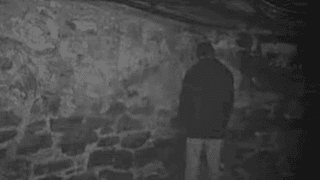
The story is that a trio of college students venture into the Maryland woods to film a documentary on the legend of the Blair Witch. What exactly the witch is is hard to say. Some locals from a nearby town relate the story of a male hermit who murdered a bunch of children decades ago. Others tell about a woman all covered in fur. The documentary crew heads into the woods to film sites associated with the legend. They get lost, and things get weird. All we know of the story is what they filmed, and the movie is presented as being the footage that was found when their two cameras were later discovered.


The trick to found footage storytelling is capturing enough on film to actually have a plot, while making it believable that the characters would be filming all that action and dialogue. Sometimes it makes sense, and sometimes it's a strain. Much of “The Blair Witch Project” involves the characters arguing over the fact that they are lost in the woods. It doesn't make a lot of sense that any of them would be filming these arguments, and the filmmakers' solution is to have them yell at each other for filming. A lot. It gets old. The found footage conceit gets even more strained when things get scary, people start running, and you wonder why this person is still holding the camera.


You just have to go with it. Remember, there had not been much found footage film-making done up to this point. There are plenty of better movies in this style, including “Paranormal Activity,” “Cloverfield,” “Chronicle,” and “VHYes,” but these all came later. “The Blair Witch Project” was one of the first, and despite myself, all these years later, I still found the ending scary.


2.5 stars out of 5

Saturday, December 18, 2021

Nosferatu (1922) **


We recently re-watched "Bram Stoker's Dracula," and I watched the 1931 "Dracula" years ago. I figured it was time to check out the original. F.W. Murnau's “Nosferatu: A Symphony of Horrors” was based on Bram Stoker's 1897 novel, but made without rights to the story. Stoker's heirs sued Murnau's production company, and a German court ordered all copies of the film to be burned. Had the film not already been distributed overseas, it would have been lost. As it was, copies survived, and the film came to be considered one of the silent-film classics.


The story changes a few details, but it is basically the Dracula story. A solicitor visits an Eastern European backwater to help a wealthy Count, who happens to be a vampire, arrange to move and purchase a house. The Count sees a picture of the solicitor's fiance/wife and becomes obsessed with her, believing her to be his reincarnated lover.


I have to stop here to admit that I did not like the movie very much. I realize this makes me a Philistine among cinephiles, but unlike some other classic silent films like “Pandora's Box” or Charlie Chaplin's “Modern Times,” I found it hard to see what the big deal is with “Nosferatu.” Truth be told, we got bored and gave up on it about halfway through. It is possible that the version we got was a bad copy. Amazon offers several versions of the film, with no indication which is the “official” version. I almost wonder if the copy we saw was made at home by someone who simply mounted a camera in front of their TV. In any event, what I saw sounded bad and looked bad. It was sometimes hard to see what was going on. I will say that Max Shreck looks pretty cool as the Count, and there is one cool effect where the Count is doing one thing while his shadow does another.


Based on my experience, I would not call “Nosferatu” essential viewing. The history of the film is interesting, and there is a great 2000 film about the making of it, called "Shadow of the Vampire." If you decide to watch the film itself, I suggest moderate expectations, and try to find a properly-curated copy.


2 stars out of 5

Monday, December 13, 2021

Marked Woman (1937) ***


We've been watching some older movies lately, and this is an old Bette Davis movie that definitely deserves a viewing.


Davis plays Mary, a “clip-joint” hostess in a nightclub. She and the other hostesses are employed to cozy up to the male customers and get them to buy more drinks and spend more money. It is implied, but never said (due to Hollywood Production Codes), that the girls' duties may extend to entertaining the men outside the club as well. The pay is good, better than an uneducated girl like Mary could get anywhere else, even if she knows that the work will dry up as she gets older. When gangster Johnny Vanning takes over the club, though, the work gets uglier. Vanning turns the place into an illegal gambling den, and he and his boys play rough with anyone who crosses them. When this leads to murder, prosecutor David Graham (Humphrey Bogart) tries to put Vanning away, but first he has to convince Mary and the other hostesses to testify against their ruthless boss.


“Marked Woman” is a solid example of film noir, but it is not half as fascinating as the story on which it is based. The Vanning character is based on Lucky Luciano, a famous, New York crime boss who was jailed for running a prostitution ring. His prosecution, led by Thomas E. Dewey (on whom Bogart's character is based), hinged on the testimony of several of Luciano's prostitutes. Key to gaining the trust and testimony of those women was Dewey's assistant D.A., Eunice Carter, the first black woman to hold that post in New York. To prevent any corrupt cops from tipping off the bad guys, Carter put together a big, synchronized raid of all Luciano's brothels, and none of the officers was informed of the targets until minutes before the raid. To escape the charges, Luciano hid out in Hot Springs, Arkansas, but a New York detective who was there on an unrelated case spotted and recognized him.


Most noir films focus on a male character, with any female characters filling the role of either femme fatale or trusting wife. Even if there is a “hooker with a heart of gold,” she is usually a side character. “Marked Woman” focuses on Mary's journey and that of her fellow hostesses, making this a very feminist movie, especially for 1937. I was especially intrigued by the conversations the hostesses have about their job and life prospects outside the nightclub, and how Mary stands up for one of the hostesses who is starting to show her age. The case against Vanning relies heavily on Mary's testimony, but as a woman of ill-repute, there is doubt as to whether she will be believed. “Marked Woman” is about putting aside judgment of women like Mary and viewing them as real human beings.


3 stars out of 5